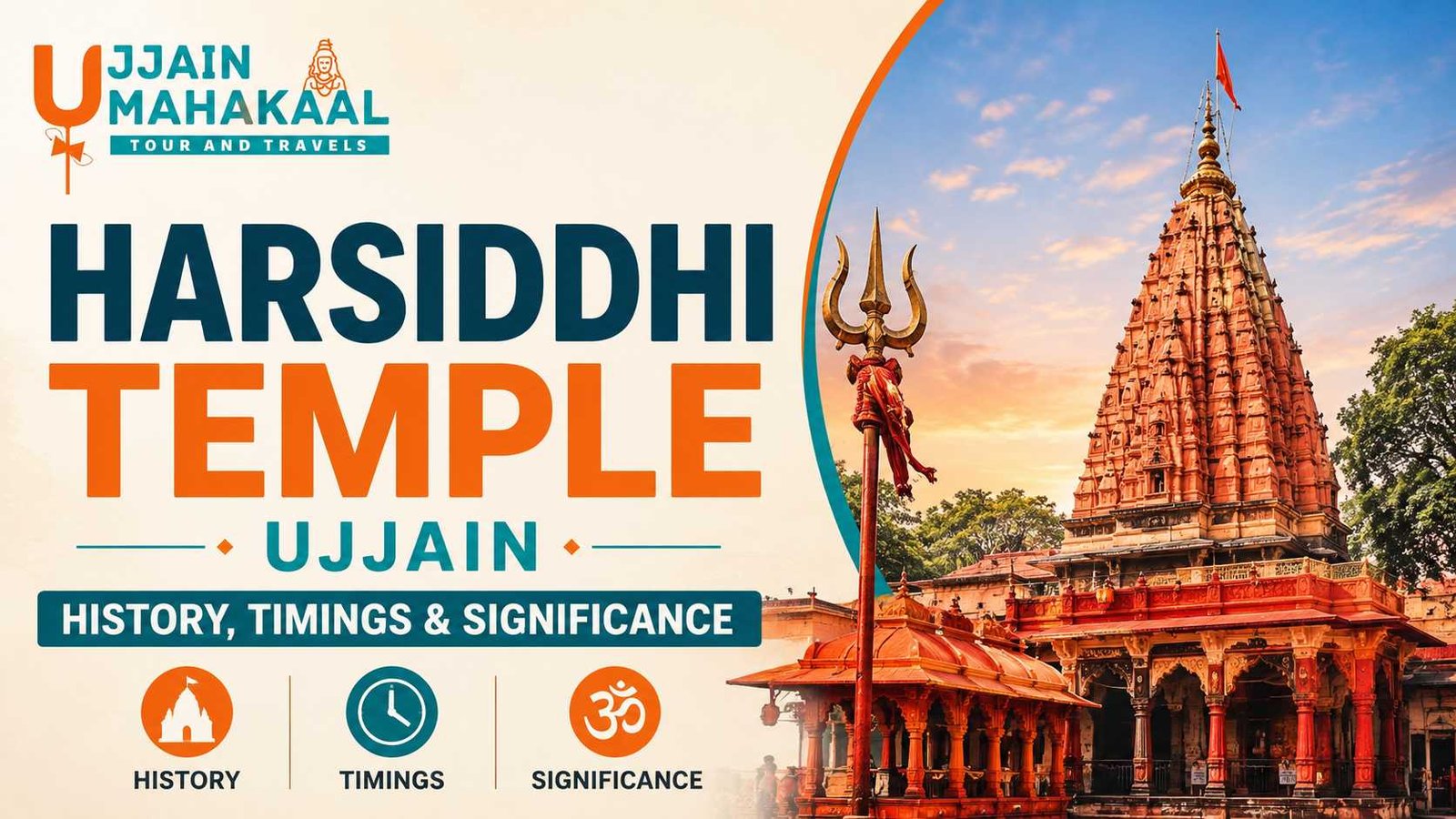
If you are planning a spiritual trip to Ujjain, you cannot skip the Harsiddhi Temple Ujjain. Most travellers only think of Mahakaleshwar Jyotirlinga when they think of Ujjain, but just a short walk away stands one of the most powerful Shakti Peethas in India. In this blog, we answer every common question about the Harsiddhi Temple Ujjain — its history, timings, significance, and how to plan your visit — in simple, easy words.
What is Harsiddhi Temple Ujjain?
It is an ancient Shakti temple dedicated to Goddess Harsiddhi, a powerful form of Goddess Parvati. The temple is located in the holy city of Ujjain, Madhya Pradesh, and is counted among the 51 Shakti Peethas of India. Devotees believe that praying here removes obstacles and brings success, which is why the goddess is also called “Harsiddhi” — meaning “the one who grants fulfilment and joy.”
Unlike a regular temple, this Shakti temple is known for its unique twin lamp towers, its deep connection with Hindu mythology, and its closeness to the famous Mahakaleshwar Temple. For anyone doing a Ujjain darshan tour, this temple is considered a must-visit stop.
Where is Harsiddhi Temple Ujjain Located?
The temple is located near Ram Ghat, on the banks of the sacred Shipra (Kshipra) River, on a small hill known as Bhairav Parvat. The best part is its location — the temple sits barely 500 to 600 metres from the Mahakaleshwar Jyotirlinga Temple, so most pilgrims cover both temples in a single visit without any extra travel.
Because of this closeness, the temple is naturally included in almost every Ujjain darshan itinerary, whether you are visiting for one day or staying longer.
What is the History of Harsiddhi Temple Ujjain?
The history of this ancient shrine goes back thousands of years. According to local belief, the temple is around 2,000 years old and is closely linked to the legendary king Vikramaditya, who ruled from Ujjain (then called Ujjayini). Harsiddhi Mata is believed to be the kuldevi, or family goddess, of King Vikramaditya, and he is said to have worshipped her regularly for wisdom and protection.
Over the centuries, the temple went through several phases of renovation. The structure you see today largely reflects the Maratha period, when the temple was rebuilt and strengthened. This is why the temple’s architecture carries a strong Maratha influence, especially visible in its red-painted walls and pillar design.
So, in short, the temple’s history is a mix of ancient mythology, royal devotion, and later Maratha-era restoration — making it one of the oldest and most historically rich temples in the city.
Why is This Temple Called a Shakti Peeth?
This is one of the most asked questions about the temple, and the answer lies in Hindu mythology. According to the Shiva Purana, when Goddess Sati gave up her life in the sacrificial fire, Lord Shiva carried her body across the universe in grief. As he carried her, parts of her body fell at different places on earth, and each of these places became a Shakti Peeth — a sacred seat of the divine feminine energy.
At this sacred spot, it is believed that the elbow of Goddess Sati fell to earth. This is why the temple is worshipped as one of the 51 (some texts say 52) Shakti Peethas spread across the Indian subcontinent. For devotees of Shakti worship, visiting this temple is considered as important as visiting the biggest Shakti Peethas in the country.
What is the legend behind the name "Harsiddhi"?
There is also an interesting legend from the Skanda Purana about how the goddess got the name Harsiddhi. It is said that once, when Lord Shiva and Goddess Parvati were alone on Mount Kailash, two demons named Chand and Prachand tried to disturb them. Shiva called upon Goddess Chandi to destroy the demons, and she succeeded. Pleased with her power, Shiva gave her the title “Harsiddhi,” meaning “the one who conquers all.”
This legend adds another layer of significance to the temple, connecting it not only to the Shakti Peeth story but also to a tale of divine victory and protection.
What is Special About the Temple's Architecture?
The architecture here is a beautiful blend of ancient design and Maratha-style craftsmanship. Some key features include:
- Four entrance gates, one facing each direction, with the main entrance facing east.
- Red-painted walls and shikhara (spire), symbolising Shakti or divine power.
- A stepwell near the south-eastern gate, which houses a Sri Yantra — a sacred geometric symbol of power.
- Smaller shrines around the main sanctum, including an idol of Goddess Annapurna.
This mix of ancient temple design with later Maratha touches makes it visually different from many other temples in the city.
What are the Famous Deep Stambhs (Lamp Towers)?
If there is one thing that makes this temple instantly recognisable, it is the twin deep stambhs, or lamp towers, standing at the entrance. These two tall pillars are lined with hundreds of small lamp holders from top to bottom.
During Navratri and other major festivals, priests light every single lamp on both towers, and the entire temple complex glows with a golden light that can be seen from a distance. This is one of the most photographed and talked-about sights in Ujjain, and it is the main reason many travellers specifically plan their visit around Navratri.
Who is Worshipped Here?
The main deity here is Goddess Harsiddhi, whose idol is coloured in dark vermillion (sindoor) and decorated with flowers and ornaments. She is seated between the idols of Mahalakshmi (goddess of wealth) and Mahasaraswati (goddess of knowledge), representing the combined power of wealth, wisdom, and strength.
Nearby, there is also an idol of Goddess Annapurna, the goddess of food and nourishment. Together, these deities make the temple a complete centre of Shakti worship, where devotees pray for prosperity, knowledge, and protection all at one place.
What are the Temple Timings?
This is a practical question every visitor asks before planning their trip. The general temple timings are:
- Temple open hours: 5:00 AM to 9:00 PM (some sources list closing time as 7:00 PM, so it is best to check locally on the day of your visit)
- Morning aarti: 7:00 AM to 8:00 AM
- Evening aarti: Around 6:00 PM to 7:00 PM
Since the temple is close to Mahakaleshwar Temple, most pilgrims plan their visit either early morning after Mahakal darshan or in the evening, when the deep stambhs light up beautifully.
Is There an Entry Fee at Harsiddhi Temple Ujjain?
No, entry to the temple is completely free for all devotees. There is no ticket or booking required for regular darshan, which makes it easy to include in your Ujjain sightseeing plan without any extra cost or paperwork.1`
What is the Best Time to Visit?
The best time to visit is during the evening aarti, when the twin lamp towers are lit and the atmosphere feels most magical. If you want to witness the temple at its grandest, plan your trip during Navratri, when all the lamps on both deep stambhs are lit together, creating a breathtaking view.
In terms of season, October to March is generally the most comfortable time to visit Ujjain, including this temple, as the weather stays pleasant for temple hopping and walking around the old city.
How Far is Harsiddhi Temple from Mahakaleshwar Temple?
Harsiddhi Temple Ujjain is barely 500 to 600 metres from the Mahakaleshwar Jyotirlinga Temple. You can easily walk between the two temples in about 8 to 10 minutes, which is why almost every Ujjain darshan package includes both temples together.
How to Reach Harsiddhi Temple Ujjain?
Reaching the temple is simple, whether you are coming from within the city or from another state.
By Air: The nearest airport is Devi Ahilyabai Holkar Airport in Indore, roughly 55 to 65 kilometres away. From there, you can book a cab or bus directly to Ujjain.
By Train: Ujjain Junction is the nearest railway station, only about 2.5 to 3 kilometres from the temple. Autos and taxis are easily available outside the station.
By Road: Ujjain is well-connected by road to Indore, Bhopal, and other major cities of Madhya Pradesh. Once you are in Ujjain city, the temple is just a short auto or e-rickshaw ride from anywhere in the old town, especially from the Mahakaleshwar Temple area.
If you don’t want the hassle of arranging local transport yourself, our team at Ujjain Mahakal Tour & Travels can arrange pickup, drop, and a complete guided temple tour covering this Shakti Peeth along with Mahakaleshwar, Kal Bhairav, and Ram Ghat.
What is the Spiritual Significance of This Temple?
For devotees, the spiritual significance of Harsiddhi Temple Ujjain lies in its identity as a Shakti Peeth combined with its closeness to the Mahakaleshwar Jyotirlinga. Visiting both temples together is considered a powerful combination of Shiva and Shakti worship in one trip.
Many devotees also visit this Shakti Peeth to pray for success in new beginnings — whether it is a new business, exams, marriage, or simply removing obstacles from life. This belief comes directly from the meaning of the goddess’s name, “the one who grants fulfilment.”
What Festivals are Celebrated Here?
The biggest festival at the temple is Navratri, the nine-day festival dedicated to the goddess. During this time, the temple is decorated with flowers and lights, and both deep stambhs are lit fully every evening, drawing large crowds of devotees.
Apart from Navratri, the temple also sees a rise in visitors during Maha Shivratri, since pilgrims combine their Mahakaleshwar darshan with a stop at this temple on the same trip.
What Other Temples Can You Visit Nearby?
Since this temple sits right in the middle of Ujjain’s temple zone, it’s easy to combine your visit with other nearby sacred spots:
- Mahakaleshwar Jyotirlinga Temple – just 500-600 metres away
- Ram Ghat – the sacred ghat on the Shipra River, a few minutes’ walk
- Kal Bhairav Temple – a short ride away, known for its unique rituals
- Gadkalika Temple – another important Shakti Peeth in Ujjain
Planning your day around these temples means you can cover most of Ujjain’s core spiritual sites without wasting time on long transfers.
Final Thoughts
Harsiddhi Temple Ujjain is not just another stop on your itinerary — it is one of the most historically and spiritually rich temples in the city, standing as proof of Ujjain’s deep connection to both Shiva and Shakti traditions. From its Vikramaditya-era origins to its glowing deep stambhs during Navratri, this sacred temple offers an experience that combines history, architecture, and devotion in one place.
If you’re planning your Ujjain trip and want a hassle-free way to cover Harsiddhi Temple Ujjain along with Mahakaleshwar, Kal Bhairav, and Ram Ghat, Ujjain Mahakal Tour & Travels can plan a complete guided darshan for you — pickup, transport, and a local guide included. Contact us today to make your Ujjain yatra smooth and memorable.
For More Information
Visit Our Website – Ujjain Mahakal Tour & Travels
Call us at – 7772828489
Frequently Asked Questions (FAQs)